Replacing Old Boilers
How to Tell When It Is Time to Replace Your Old Boiler
A boiler rarely fails all at once. More often, it starts sending smaller signals: uneven heat, louder operation, rising utility costs, or repair visits that become a little too familiar. When several of those signs show up at the same time, replacement may be the more practical choice than continuing to patch an aging system.
For homeowners in Southern Ontario, from Hamilton through Brant, Haldimand, and Norfolk County, that decision matters because long heating seasons put real strain on older equipment. A boiler that limps through mild weather may struggle when temperatures stay low for days, especially if it has already needed repeated service.
The decision does not need to be guesswork. A careful evaluation can show whether a repair still makes sense or whether a modern upgrade would deliver better comfort, lower operating costs, and fewer surprises.
How Boiler Age Affects Reliability
Older boilers can still run, but reliability usually declines as major components wear down and parts become harder to source. Age alone does not automatically mean replacement, although it does raise the odds that repairs will become more frequent and less cost-effective.
Typical Lifespan of Residential Boilers
Many residential boilers last roughly 15 to 25 years, depending on the model, water quality, installation quality, and maintenance history. Cast-iron units can sometimes last longer, but efficiency, safety, and parts availability often become the bigger concerns as equipment ages. Homeowners comparing older equipment with newer models can review ENERGY STAR certified residential boiler information from Natural Resources Canada for useful efficiency context.
How Southern Ontario Winters Expose Weaknesses
Cold snaps and long heating cycles reveal weak circulators, tired controls, scaling, and heat-transfer problems quickly. A system that seems adequate in October can fall behind in January when it needs to run for long stretches.
Why Maintenance History Matters
Regular service can slow wear, catch leaks early, and keep the burner, controls, and venting in better condition. A boiler with skipped maintenance, repeated overheating, or a growing repair history is usually a weaker candidate for another round of fixes.
Warning Signs Your Boiler May Be Nearing the End
The clearest warning signs usually show up in everyday comfort and performance. When a boiler needs more attention while delivering less heat, the pattern is worth taking seriously.
Frequent Breakdowns and Repeat Service Calls
If the same boiler keeps failing because of ignition, circulation, pressure, or control issues, there may be deeper wear in the system. Repeated service calls can be a sign that the unit is no longer dependable enough for another full heating season.
Rising Energy Bills Without Better Comfort
Higher bills with no improvement in warmth often mean the boiler is working harder than it should. Loss of efficiency can come from aging heat exchangers, poor combustion, sludge buildup, or controls that no longer regulate the system properly.
Uneven Heating Across Rooms or Zones
Cold rooms, sluggish zones, or inconsistent radiator temperatures can point to circulation trouble or reduced output. If balancing, bleeding, or basic service no longer improves comfort, the boiler itself may be part of the problem.
Banging, Whistling, or Other Unusual Noises
Noises such as banging, kettling, whistling, or short cycling can point to scale, trapped air, pressure issues, or mechanical stress. These sounds deserve prompt attention, especially when they become louder or more frequent.
Leaks, Rust, and Visible Corrosion
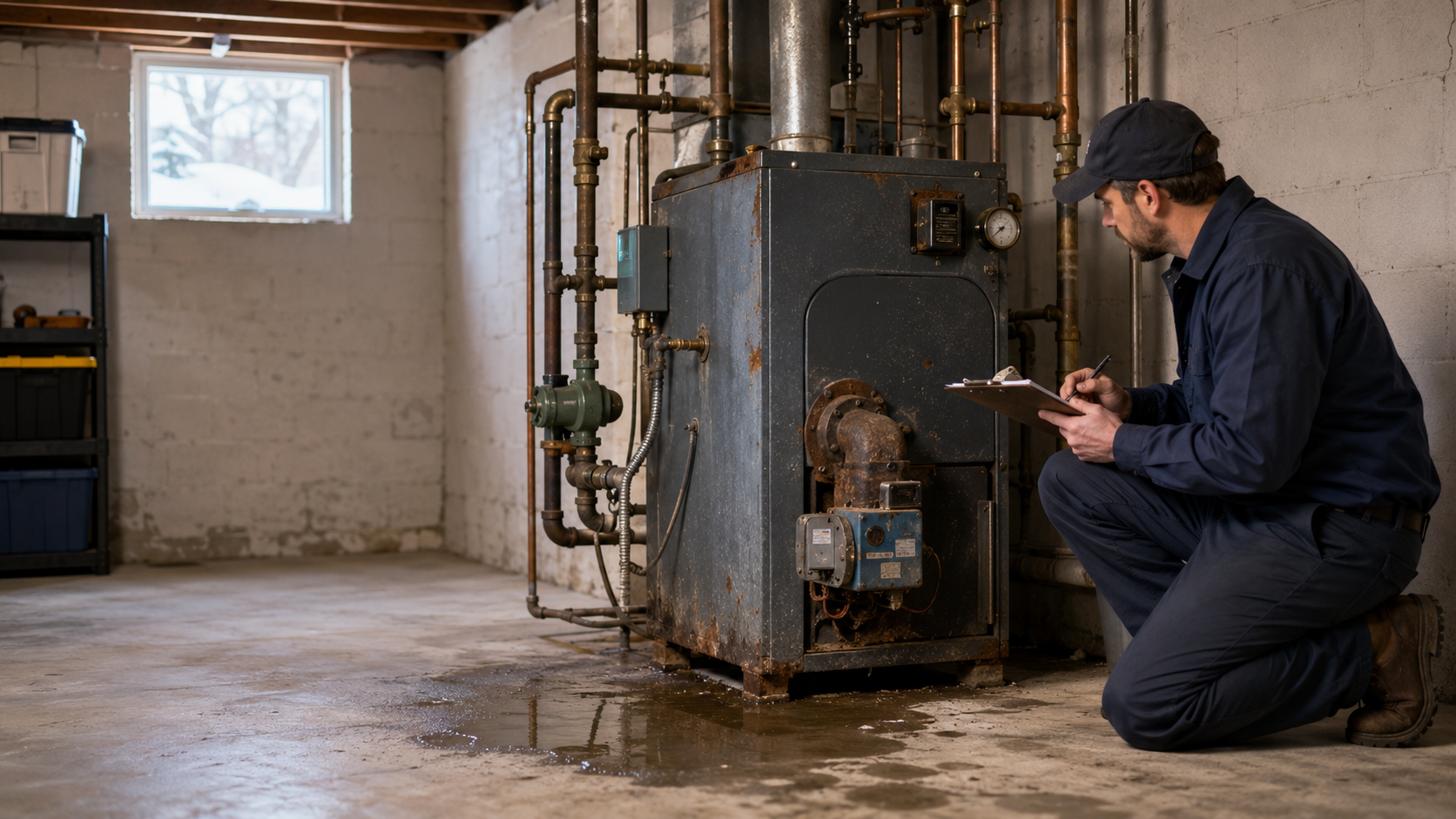
Water around the boiler, rust at fittings, or corrosion on the cabinet can signal that the system is breaking down from the outside in. Once metal components, seals, or heat exchangers begin deteriorating visibly, replacement should be part of the conversation.
When Repair Costs Stop Making Sense
Repairing a boiler can be reasonable if the fix is small and the equipment is otherwise healthy. The tipping point comes when the repair bill starts competing with the value of a newer, safer, and more efficient system.
Comparing Repairs With Long-Term Ownership Costs
A single repair may be cheaper today, but it may not change the bigger picture. Homeowners should compare the current repair against likely future service, fuel use, comfort problems, and the remaining life of the boiler.
The Risk of Paying for Obsolete Parts
Older boilers may rely on parts that are discontinued, specialized, or expensive to track down. Paying more for outdated components can make little sense if the same money could be put toward a modern system with better support.
Checking for Rebates and Efficiency Programs
Before approving a major replacement, it is worth checking available efficiency programs. Ontario homeowners can review current options through Enbridge Gas rebates and energy conservation programs, since eligibility and available incentives can change over time.
What You Gain From a Modern High-Efficiency Boiler
Modern boilers are built to use fuel more effectively and respond more precisely to home comfort demands. The upgrade can affect both operating costs and how steady the home feels during cold weather.
Better Fuel Efficiency
High-efficiency boilers extract more heat from the fuel they burn, which can reduce wasted energy. That improvement will not erase heating costs, but it can make a noticeable difference over a long Southern Ontario winter.
More Consistent Comfort
Modern controls and better modulation help maintain steadier temperatures with fewer swings. Rooms tend to feel more even, and the system usually runs more quietly and predictably.
Combi Boiler Advantages
For some homes, a combi boiler can free up space by combining space heating and domestic hot water in one unit. This can be useful in smaller mechanical rooms or homes where a separate hot water tank takes up valuable space.
Improved Safety, Controls, and Diagnostics
Newer systems often include better safety features, more accurate controls, and clearer diagnostic information. That makes maintenance easier and can help technicians identify issues before they become major failures. Homeowners should also review local carbon monoxide guidance, including the City of Hamilton’s information on smoke alarms and carbon monoxide alarms.
What to Expect When Planning a New Boiler Installation
A boiler replacement works best when the new system is matched to the home, the plumbing, and the heating load. Good planning reduces disruption and helps the equipment perform properly from day one.
Proper Sizing for the Home
Bigger is not always better. A properly sized boiler runs more efficiently, cycles less often, and delivers more stable comfort than an oversized unit that short-cycles through cold days.
Venting, Piping, and Code Considerations
Modern boilers may require updated venting, condensate management, piping changes, or new controls. These details matter because installation quality affects performance, safety, and long-term reliability.
Working With a Qualified Contractor
Gas-fired heating equipment should be evaluated and installed by properly qualified professionals. Ontario homeowners can use the TSSA registered fuels contractor lookup to verify authorized contractors before approving gas-related work.
Timeline, Disruption, and Seasonal Timing
Most boiler replacements can be planned to limit downtime, although older systems sometimes reveal extra work once removal begins. Scheduling before the coldest part of the season can reduce stress, especially when the existing boiler is already showing signs of decline.
Choosing the Right Contractor for the Evaluation
A strong evaluation starts with honest diagnostics, not a rushed sales pitch. The best contractors explain what is failing, what can still be repaired, and where replacement is the more sensible option.
Why Honest Diagnostics Matter
A technician should be able to show why the boiler is acting up and whether the problem is isolated or systemic. Prologic Comfort Solutions approaches these decisions in a practical, no-pressure way, which can help homeowners make a clearer choice when the stakes are high.
Questions to Ask Before Approving the Work
Homeowners should ask what failed, how long the repair is likely to last, whether parts are readily available, and what replacement options would solve the issue more completely. It also helps to ask about warranty coverage, efficiency ratings, installation requirements, and any code-related upgrades.
What Local Homeowners Should Look For
From Hamilton to Norfolk County, experience with local heating loads, winter demand, older homes, and code-compliant gas work matters. Norfolk County homeowners can also review local fire safety guidance, including Norfolk County Fire Department’s carbon monoxide alarm requirements, when assessing home heating safety.
The best answer is not always immediate replacement, and it is not always another repair. The right answer depends on the boiler’s age, condition, safety, repair history, and ability to keep the home comfortable through another Southern Ontario winter.